

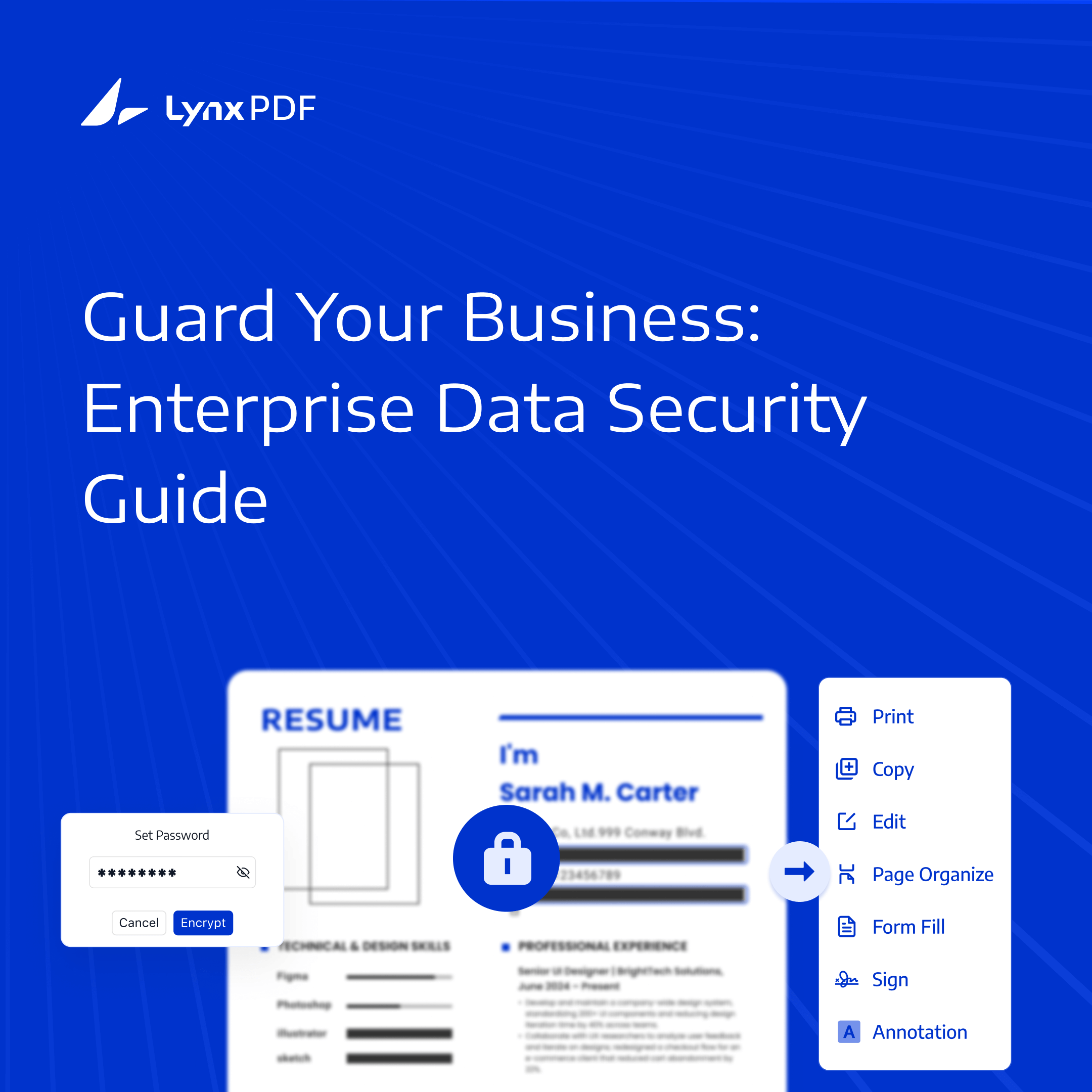
In today’s digital workplace, remote collaboration and cloud-based document sharing are commonplace — but they come with serious risks. Data breaches involving contracts, financial records, or customer information can lead to compliance fines, reputational harm, and financial loss.
That’s why securing PDFs is a business-critical need. Organizations require a reliable PDF security solution that protects confidentiality, ensures integrity, supports compliance, and fits seamlessly into daily workflows.
Core Enterprise Security Challenges
In today’s enterprise environments, PDFs are actively edited, shared, and signed across teams and external partners. As documents move faster and farther than before, traditional sharing methods struggle to protect sensitive data and maintain trust.
Confidentiality & Controlled Access in Document Sharing
As enterprise documents are shared, reviewed, and approved across multiple teams and external parties, controlling access, meeting compliance requirements, and preserving document integrity become increasingly difficult. These challenges are not isolated issues, but closely connected risks that emerge throughout the document lifecycle.
 Image Source: Pixabay
Compliance: Meeting Regulatory Requirements
Regulations such as GDPR require enterprises to handle sensitive information with strict controls and clear accountability. Organizations must not only protect data, but also demonstrate that compliant safeguards are consistently applied.
Without proper document-level security, enterprises face increased exposure to audits, fines, and legal liability.
Integrity: Ensuring Document Authenticity
As documents move through complex workflows, the risk of unauthorized changes increases. Contracts, financial reports, and legal documents must remain accurate and trustworthy from creation to execution.
Enterprises need clear visibility into whether a document has been altered and whether approvals or signatures can be verified.
How LynxPDF Enhances Document Security
Enterprise document security is not achieved through a single control, but through layered protection across the entire document lifecycle. LynxPDF combines permanent data removal, access control, and verifiable authenticity to help organizations protect sensitive information while keeping everyday workflows efficient and compliant.
Redaction — Permanent and Irreversible Data Masking
In many enterprise workflows, documents must be shared while selectively removing sensitive information. Audit reports, bid proposals, legal disclosures, and external-facing files often contain personal data, financial figures, or client identifiers that should never leave the organization.
Recent public disclosures have once again highlighted a critical risk in document redaction. In the widely reported release of Epstein-related court files, portions of the documents were “redacted” visually — yet the underlying text remained selectable and copyable. This oversight allowed sensitive information to be reconstructed, triggering public scrutiny and legal concern.
The incident underscores a hard truth: redaction that only hides content is not redaction at all.
LynxPDF’s redaction is built for high-risk, high-accountability scenarios where mistakes are not acceptable. Once content is redacted, the system clearly indicates that the action is permanent and irreversible. The underlying data is fully removed from the document structure — eliminating the common risk of “visual masking” where hidden text can still be recovered.
Redaction in LynxPDF supports:
-
Freeform rectangular redaction for flexible area-based masking
-
Precise selection of text, words, or numbers for paragraph-level removal
To ensure redacted files remain professional and readable, LynxPDF allows teams to customize the appearance of redaction blocks to maintain layout consistency:
-
Adjustable redaction colors
-
Optional replacement text
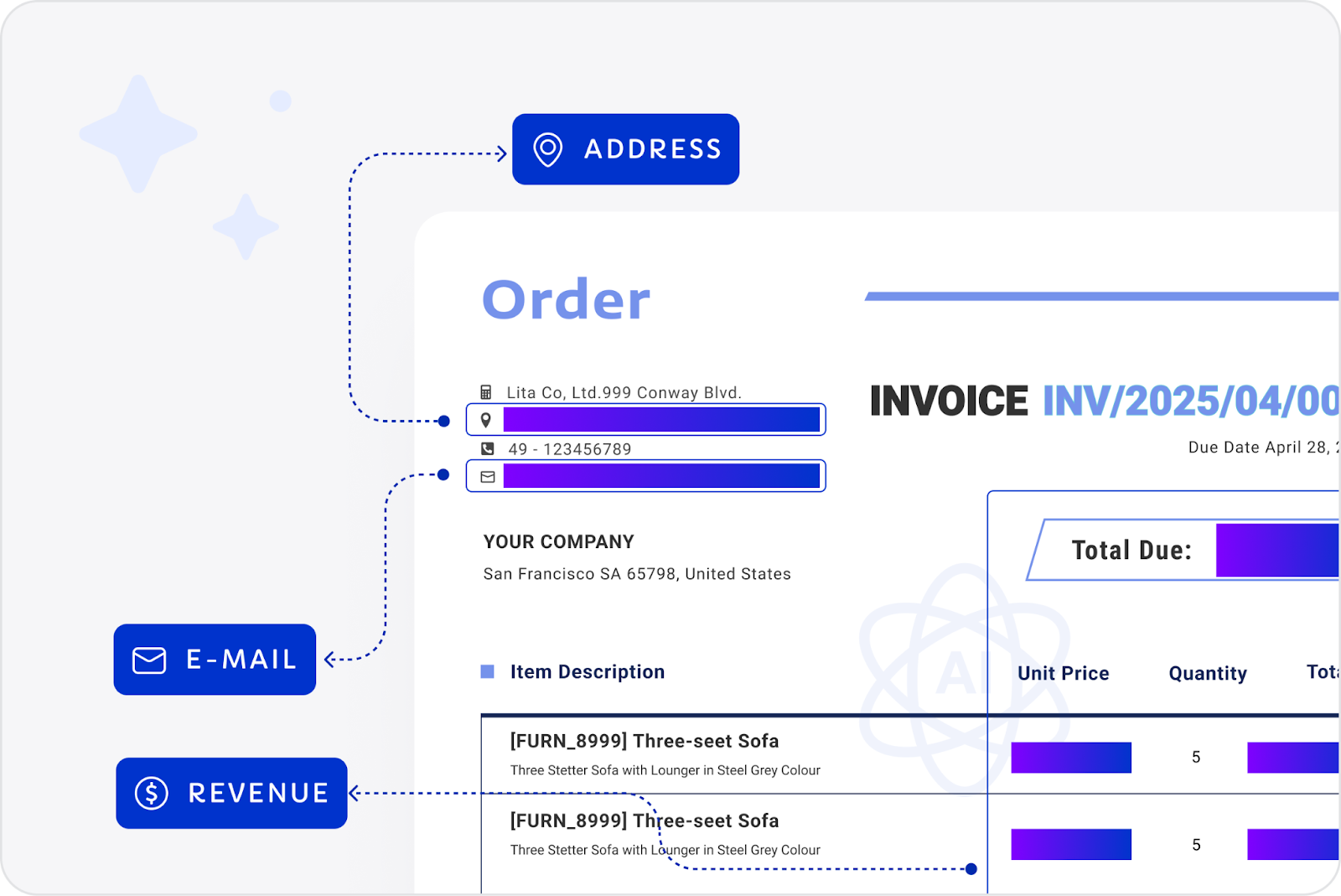
Permanent redaction plays a critical role in privacy-conscious document workflows. By fully removing sensitive content, enterprises can better control data exposure, support compliance-oriented processes, and maintain professional standards when sharing documents externally.
Encryption — Enterprise-Grade Access and Permission Control
Document security does not end once a file is created. In enterprise environments, PDFs are often shared beyond the original system — by email, across teams, or with external partners.
LynxPDF protects documents using 256-bit AES encryption combined with a dual-password model:
-
Open Password to control who can open the file
-
Permission Password to define what actions are allowed after access
Permission controls can be applied to:
-
Printing and content copying
-
Editing (read-only enforcement)
-
Page insertion, deletion, and rotation
-
Form filling, signing existing signature fields, and annotations
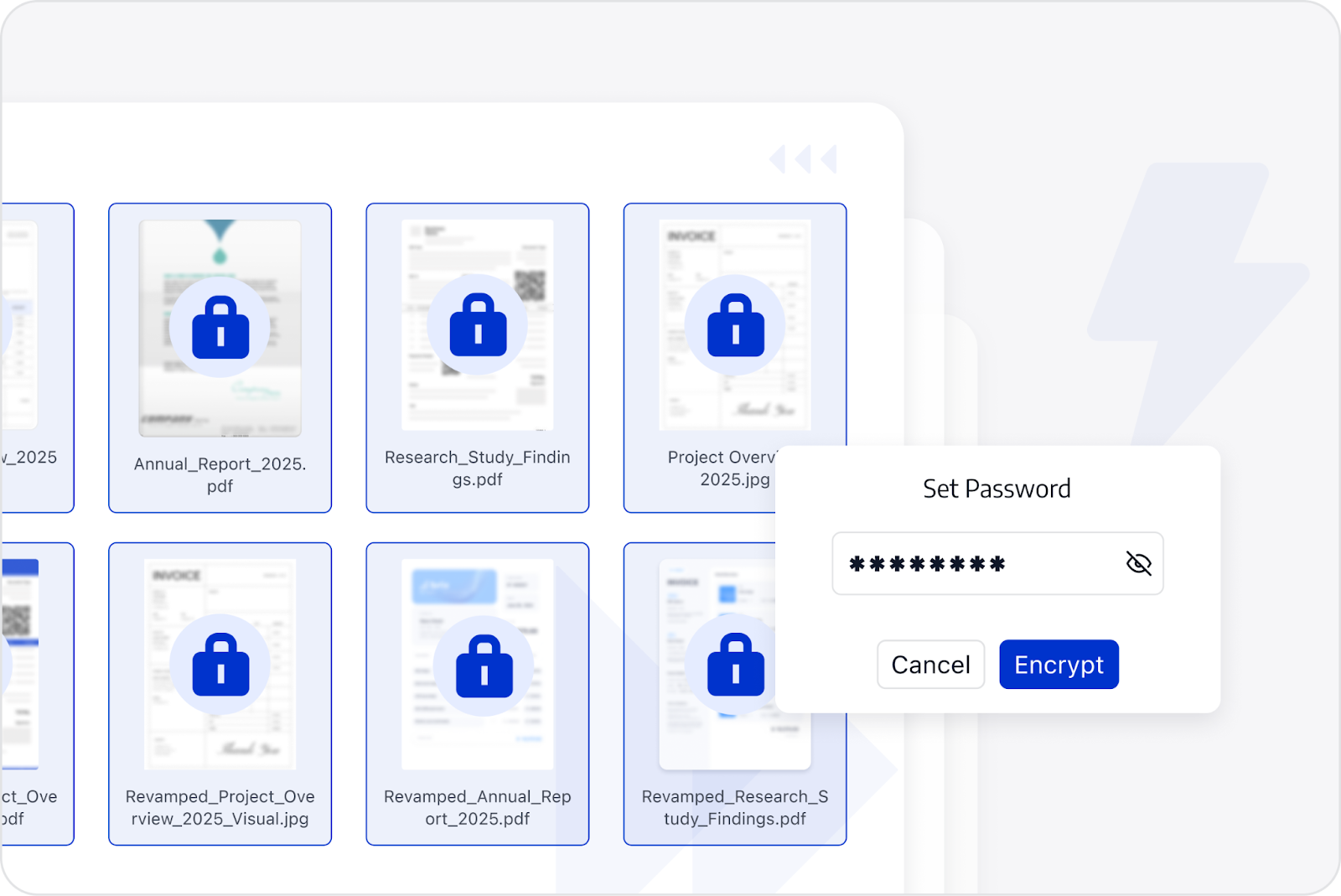
These controls remain effective even if the document is forwarded. For legal, financial, and internal documents, this ensures that access and usage stay aligned with enterprise security policies — without disrupting collaboration or review workflows.
Digital Signature — Verifiable Authenticity and Document Integrity
In enterprise operations, document trust depends on clear proof of authenticity. Organizations need to know who signed a document, whether it has changed, and when the signature was applied.
When a digitally signed PDF is opened in LynxPDF, signature verification is triggered automatically. Users are presented with clear, auditable indicators across key dimensions:
-
Document integrity: unchanged, modified, or signature damaged
-
Post-signature permissions: no changes allowed, or limited actions such as form filling, signing, or annotations
-
Signer identity validity: verified or unverified
-
Signing time source: local system time or trusted timestamp server
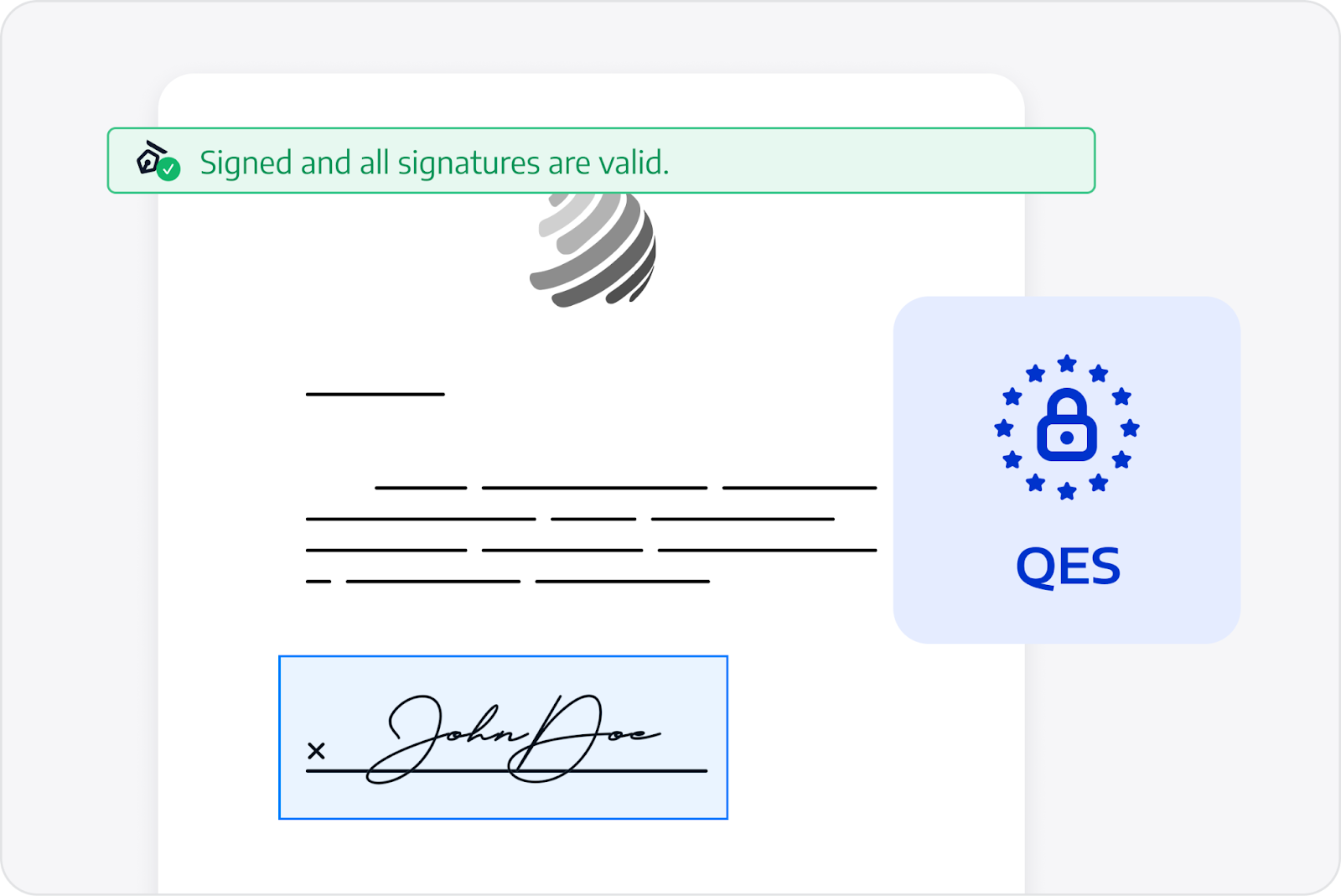
This visibility is essential for contracts, procurement agreements, and HR documents — especially in remote or cross-border scenarios. It helps enterprises detect tampering early, support compliance reviews, and establish trust across internal and external workflows.
Together, redaction, encryption, and digital signatures form a practical security foundation for enterprise PDFs. They address data exposure, unauthorized access, and document tampering at their source — allowing organizations to share, collaborate, and sign documents with confidence, without sacrificing control or compliance.
Additional Security Features: Strengthening Enterprise-Scale Protection
Beyond core security capabilities, LynxPDF offers additional features that help enterprises maintain consistency and control at scale.

Image Source: Pixabay
Watermarking adds visible or semi-transparent markers — such as “Confidential” or “Internal Use Only” — to indicate document ownership or usage scope. This enhances traceability and discourages unauthorized distribution without affecting readability.
Flatten PDF converts annotations, form fields, and layers into static content, locking down finalized documents. This is particularly valuable for archiving contracts, compliance records, or audit-ready files where post-approval changes must be prevented.
Batch Processing enables organizations to apply encryption, watermarks, or permission settings to multiple files at once. This reduces manual effort, minimizes configuration errors, and ensures consistent security policies across large document volumes.
Together, these features support enterprise-scale document management while reinforcing a unified security strategy.
Get Started with Enterprise-Grade PDF Security
LynxPDF empowers organizations to protect sensitive documents with confidence. With intuitive redaction, powerful encryption controls, and reliable digital signatures, enterprises can secure their workflows without adding complexity.
Explore LynxPDF’s enterprise PDF security capabilities and see how they fit seamlessly into your existing document processes.


